

Understanding Day Trading Strategies: Can You Make Stock Trading Your Primary Job?
Have you ever imagined being able to work from anywhere, armed with just a laptop and an internet connection, and making thousands of dollars in a matter of hours? The idea of leaving the standard nine-to-five office grind to become your own boss through the stock market is incredibly enticing. You can trade from a beach in Bali, a coffee shop in Paris, or simply from the comfort of your own living room.
For many people, day trading is often viewed as the ultimate shortcut to financial freedom and an escape from corporate politics. The promise of compounding small daily gains into massive wealth draws millions of hopeful individuals into the financial markets every year. It represents the ultimate modern dream of autonomy, where your income is determined solely by your own skill and decision-making.
However, behind the glamorous profit screenshots and luxurious lifestyles that constantly flood social media, lies a highly challenging and risky industry reality. The truth is that the financial markets are a zero-sum arena where institutional algorithms and professional traders actively compete against retail newcomers. Without the proper preparation, the market can be an incredibly unforgiving place that consumes capital rapidly.
This educational article will thoroughly dissect what day trading strategies actually are, provide a detailed practical guide to getting started, and answer the big question: can this activity truly become your primary job? We will look past the social media hype and look closely at the structural mechanics, psychological traps, and professional frameworks required to survive and thrive.
What Exactly is Day Trading?
Simply put, day trading is a financial strategy of buying and selling investment instruments, such as stocks, currencies, or options, within the exact same trading day. This means that a day trader will never leave their investment positions open overnight until the next day when the market reopens. Every single trade initiated during the morning session must be completely liquidated before the final closing bell rings.
All transactions must be closed—whether in a profit or a loss—because holding positions overnight introduces a massive layer of uncontrollable risk. When the market is closed, major geopolitical events, corporate earnings reports, or unexpected economic data can occur. These events can cause a stock price to “gap down” or open significantly lower the next morning, bypassing your planned safety orders.
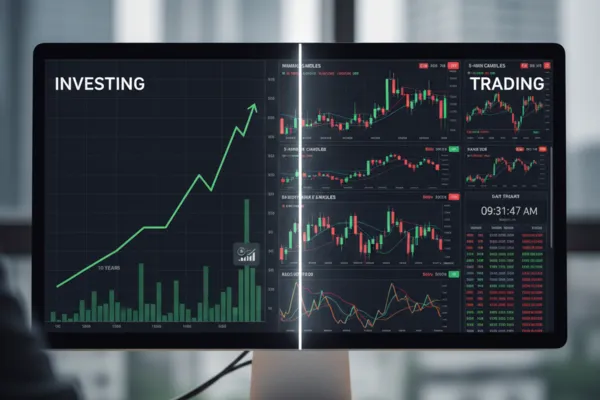
This fast-paced strategy stands in stark contrast to conventional long-term investing, which tends to hold stocks for months, years, or even decades. While long-term investors focus heavily on a company’s fundamental health, balance sheets, and macroeconomic market share, day traders care almost exclusively about short-term price volatility and immediate market liquidity. To a day trader, a stock is not a company to own, but a vehicle for short-term capital movement.
Why are So Many People Interested in Making It a Career?
The primary reason is, of course, unparalleled time flexibility and the potential for daily profits that are not limited by a corporate salary cap. You do not have to deal with morning traffic jams, you have no demanding bosses to report to, and you are entirely free to decide when you want to work. If you reach your financial goal within the first hour of market open, your workday is effectively finished.
Additionally, the dynamic daily price movements of global stocks offer rapid profit opportunities for those who know how to exploit minor inefficiencies. In a volatile market, a stock can easily fluctuate three to five percent in a few hours, providing ample waves for a skilled trader to ride. This high velocity of capital efficiency allows successful traders to compound their account balances at a speed that traditional savings accounts cannot match.
Furthermore, the modern rise of advanced retail trading software, fractional shares, and zero-commission brokerages has democratized access to global markets. Decades ago, day trading was an elite activity reserved exclusively for wealthy individuals on Wall Street trading floors. Today, anyone with a smartphone, a decent internet connection, and a few hundred dollars can access the exact same live market data as institutional professionals.
However, this ease of access creates a dangerous illusion that trading is an easy game to win. Global statistics consistently reveal that more than 80% to 90% of beginner traders suffer significant financial losses in their very first year of trying. Day trading is absolutely not a get-rich-quick scheme; it is a highly serious, high-pressure profession that demands an exceptional level of technical expertise and emotional resilience.
The Core Pillars of Day Trading Strategies
To survive the brutal fluctuations of the global stock market, a professional trader must never rely on mere instinct, luck, or social media chatroom rumors. Successful trading relies on a highly structured, rule-based approach that combines mathematics, market psychology, and rigorous behavioral control. There are three core foundational pillars that every aspiring full-time day trader must master.
1. In-Depth Technical Analysis and Chart Literacy
Technical analysis is the primary navigation map for a day trader to read real-time market movements, historical patterns, and order flow accurately. Instead of reading financial balance sheets, day traders spend hours studying price charts across multiple timeframes, ranging from one-minute charts to daily charts. They look for specific repeating geometric structures that indicate imbalances between buying demand and selling pressure.
You must learn how to read price action organically, understand complex candlestick formations, and correctly utilize essential technical indicators. Tools such as Exponential Moving Averages (EMA), Relative Strength Index (RSI), Volume-Weighted Average Price (VWAP), and MACD are crucial for identifying optimal trade setups. These indicators help clarify market noise, allowing you to see where major institutions are likely placing their orders.
The ability to quickly identify trend directions, support levels, and resistance zones within minutes is the key to finding high-probability trade setups. A professional trader does not try to guess what the market will do next; instead, they react to what the market is currently doing. They wait patiently for their specific chart pattern to form before executing an entry order with high precision.
2. Strict Risk Management and Capital Preservation
Long-term success and career longevity in the trading world are not determined by how often you correctly guess the market’s direction. Even the most profitable trading algorithms and legendary hedge fund managers have win rates that hover around 50% to 60%. What truly matters is how well you can limit your financial losses when your market prediction inevitably turns out to be wrong.
Professional risk management begins with understanding the Risk-to-Reward Ratio (R:R) before you ever click the buy button. A standard professional framework requires an R:R ratio of at least 1:2 or 1:3 on every single trade executed. This means that if you are risking $100 on a trade if it fails, your potential profit target must be at least $200 or $300 if it succeeds.
If a trader loses 6 out of 10 trades ($100 loss each = $600 loss)
but wins 4 out of 10 trades ($200 profit each = $800 profit),
they still remain net profitable ($200 net gain) despite a poor 40% win rate.
Utilizing automated stop-loss features is a non-negotiable obligation to protect your valuable trading capital from a sudden, catastrophic market wipeout. A stop-loss is an automatic market order placed with your broker that instantly exits your position if the stock price moves against you past a certain threshold. Never, under any circumstances, should you trade without a stop-loss or manually move it lower out of stubborn hope.
3. Stable Trading Psychology and Emotional Control
A day trader’s biggest and most dangerous enemy is not market makers, institutional short-sellers, or sophisticated computer algorithms. The true enemy is the volatile mix of emotions inside their own mind, specifically greed, fear, and cognitive bias. When real money is on the line, the human brain naturally triggers a fight-or-flight response that impairs rational decision-making.
Greed often manifests when a trader is on a winning streak, causing them to over-leverage, ignore risk parameters, or hold onto a profitable position for too long. On the flip side, fear occurs after a series of painful losses, making a trader hesitant to execute a valid setup due to a fear of losing money again. This emotional instability leads to erratic trading behavior, breaking rules, and ultimately blowing up accounts.
Another psychological trap is “revenge trading,” which happens when a trader experiences a massive loss and immediately takes bad trades to win the money back. This emotional state clouds judgment completely and almost always leads to even larger financial disasters. High discipline to remain completely calm, systematic, and detached under immense market pressure is what definitively separates amateur traders from seasoned professionals.
Common Day Trading Styles Explained
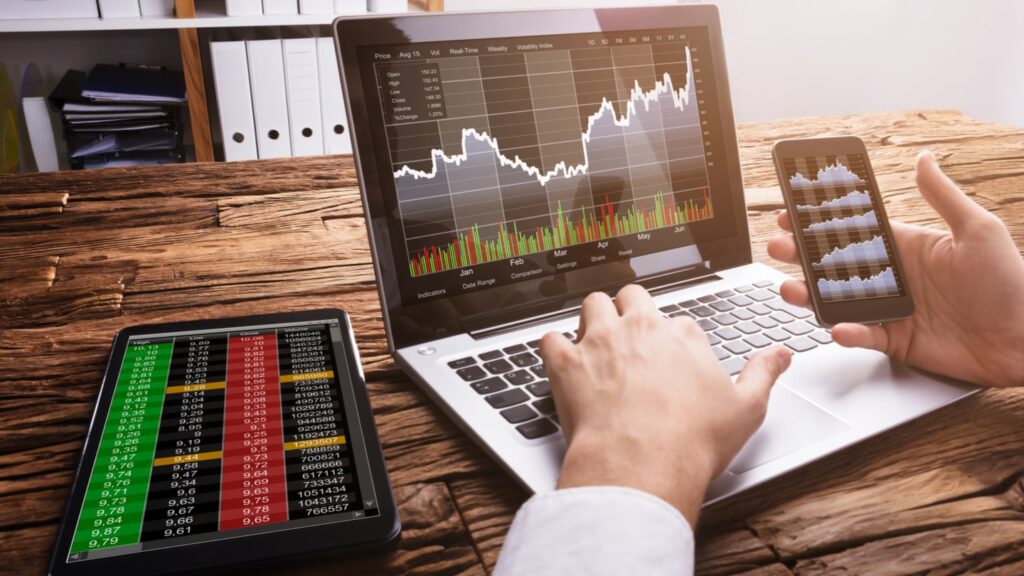
Not all day traders operate in the exact same manner; there are several distinct sub-strategies within the discipline, depending on a trader’s personality and risk tolerance. Finding the specific style that matches your cognitive processing speed and emotional makeup is essential for long-term comfort and profitability.
Scalping: The High-Speed Velocity Game
Scalping is the most intense, ultra-short-term trading style that involves buying and selling stocks within seconds or minutes. Scalpers aim to capture incredibly small price movements, often just a few cents per share, using massive position sizes to generate meaningful profits. They trade dozens or even hundreds of times throughout a single market session, relying heavily on level 2 order flow and market depth.
This style requires extreme focus, lightning-fast reflexes, and software that can execute trades instantly without delay. Scalpers do not care about daily trends or macroeconomic stories; they only care about immediate, micro-second momentum. While highly lucrative for individuals with rapid focus, it is also incredibly exhausting and carries a high risk of mental burnout.
Momentum Trading: Riding the Day’s Biggest Waves
Momentum traders focus exclusively on stocks that are making massive, high-volume price movements driven by significant news catalysts. These news catalysts are typically quarterly corporate earnings beats, breakthrough FDA product approvals, major merger announcements, or viral retail hype. These stocks often move 20% to 50% or more in a single day, creating large, highly visible trends.
A momentum trader aims to enter the stock early in the trend, ride the upward wave of buying volume, and exit before the momentum reverses. This style requires a highly efficient stock scanner that can detect unusual volume spikes within the first few minutes of the opening bell. It is an exciting style with high profit potential, but requires quick exit skills as momentum stocks can crash just as fast as they climb.
Mean Reversion: Trading Against the Extremes
Mean reversion trading is based on the mathematical and psychological theory that asset prices eventually return to their historical average or mean. When a stock price moves too far and too fast in one direction, it becomes technically “overbought” or “oversold.” Mean reversion traders look for these extreme mathematical deviations and place trades in the opposite direction of the current trend.
For example, if a stock suddenly surges upward due to irrational retail panic buying, a mean reversion trader will short-sell the stock at the top. They anticipate that the initial buying frenzy will quickly exhaust itself and the price will drop back down to its fair moving average. This style requires immense patience, precise timing, and an accurate understanding of key overextended technical boundaries.
A Practical Guide to Starting Day Trading from Scratch
If you are serious about diving deep into this highly competitive field, a structured, step-by-step approach is vital so your capital does not vanish. You must treat day trading exactly like launching a startup business, which requires capital budgeting, proper equipment, and an extensive training phase.
Step 1: Prepare Adequate “Cold Money” Capital
The golden rule of trading physics is to never use money intended for essential daily living expenses, emergency healthcare, or family obligations. You should only trade with “cold money”—capital that, if completely lost due to severe market risks, will not disrupt your current lifestyle or mental well-being. Trading with money you cannot afford to lose creates immense psychological panic, forcing you to make desperate mistakes.
Additionally, you must ensure your starting capital is large enough to operate within proper risk parameters without over-leveraging your positions. For example, in the United States, the Pattern Day Trader (PDT) rule legally requires a minimum balance of $25,000 in a margin account to execute more than three day trades within a five-day rolling period. If your capital is below this threshold, you may need to look at international brokers or trade alternative asset classes.
Step 2: Choose a Professional and Highly Responsive Broker
Your choice of a brokerage platform can literally make or break your day trading business, as execution speed is everything. For day trading, you must avoid traditional retail investment apps that lack advanced order routing and feature slow execution times. Instead, look for direct-access brokers that route your orders directly to the electronic exchanges without intermediary delays.
Furthermore, pay close attention to the fee and commission structures offered by various professional trading brokers. Because day traders execute dozens of trades per week, high commission structures can eat into your net profitability significantly. Ensure the broker also provides access to high-quality short inventory if your strategy relies heavily on short-selling overvalued stocks.
Step 3: Invest in High-Quality Hardware and Data Feeds
You cannot compete effectively against institutional Wall Street firms if you are trading from a slow laptop using an unstable public Wi-Fi connection. A professional setup requires a high-performance computer with a fast processor and enough RAM to run multiple charting software programs simultaneously without lag. Many professional traders utilize multiple monitor screens to track different stock market sectors at the same time.
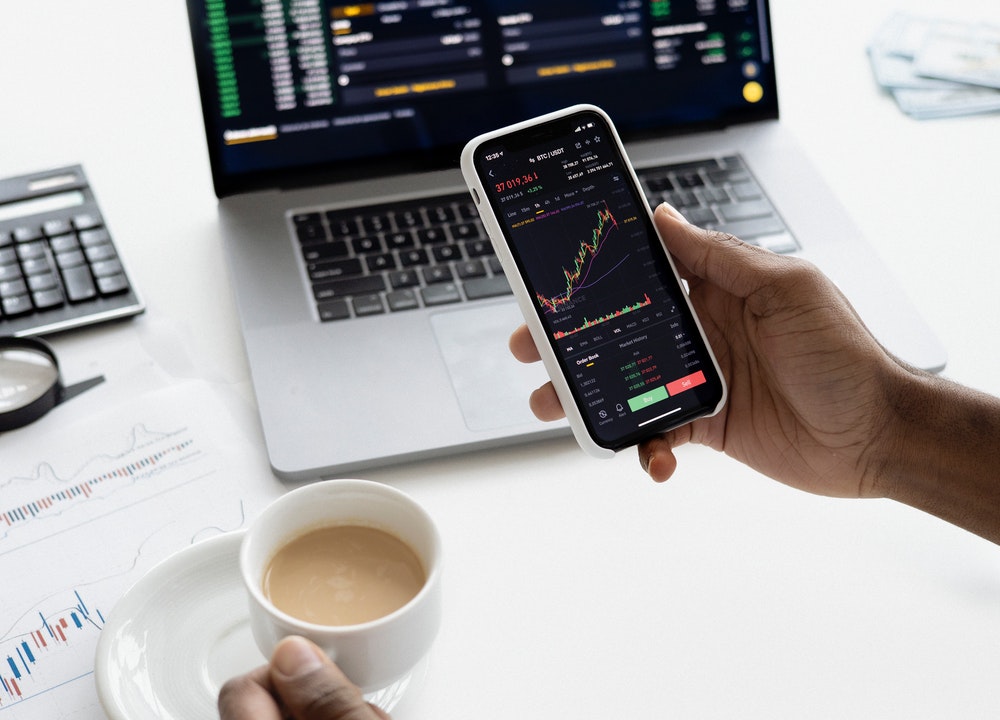
Equally important is investing in a high-quality, real-time Level 2 data subscription feed, which shows the live buy and sell orders currently waiting in the market queue. Delayed data is completely useless for day trading, as price action shifts in fractions of a second. Treat these data subscriptions as your necessary monthly business overhead costs.
Step 4: Master the Simulator Before Risking Real Cash
Before risking a single dollar of your hard-earned money in the live market, you must spend months practicing on a trading simulator. A simulator provides real-time market data but allows you to trade using virtual money, creating a safe sandbox environment to practice. Use this phase to completely familiarize yourself with hotkey executions, order types, and software functionality.
More importantly, use the simulator to rigorously test your technical strategies over hundreds of historical trade setups to find your mathematical edge. Do not move to live trading until you can show consistent profitability on the simulator over a minimum consecutive period of three to six months. Transitioning too early to live cash is the primary reason why most retail traders lose their entire accounts.
Can Day Trading Be a Full-Time Job?

The short answer is yes, it is absolutely possible to make day trading your primary full-time job, but the transition is incredibly difficult. Making day trading your sole source of income means you must be prepared to face weeks or even months without a steady paycheck. Unlike a corporate job, your monthly income is entirely dependent on market conditions and your personal performance.
The stock market goes through distinct seasonal cycles; there are times when volatility is high and profits flow easily, and periods when the market is sluggish. During market consolidation phases, a day trader might make no money at all, or even experience a controlled drawdown period of successive losses. If you do not have a robust financial cushion, this lack of predictable income can lead to extreme mental anxiety and forced trades.
Therefore, before you ever consider quitting your full-time job to become a trader, you must have a massive financial runway in place. A professional recommendation is to have an emergency fund capable of covering at least twelve to twenty-four months of living expenses completely separate from your trading capital. This separate cushion ensures that a bad trading week will not impact your ability to pay rent, buy groceries, or support your family.
Success Tips for Adapting as a Full-Time Trader
For those who have built a proven track record on a simulator and are ready to transition smoothly into live full-time trading, here are some practical operational tips.
Maintain a Highly Detailed Trading Journal
A professional trading journal is the single most important tool for continuous self-improvement and long-term career survival. You must meticulously document every single trade you execute, including the entry price, exit price, share size, and the exact technical chart pattern that triggered your action. Take screenshots of the chart at the moment of entry and exit to visually review your execution accuracy later.
This journal serves as your weekly and monthly evaluation material to identify hidden behavioral patterns and technical mistakes. Over time, your journal will reveal which specific strategies make you the most money and which setups consistently cause you to lose capital. Without an honest, data-driven evaluation process, you are not trading professionally; you are simply gambling blindly.
Focus Deeply on Only a Few Core Stocks
Many novice traders make the fatal mistake of trying to monitor dozens of moving stocks simultaneously, which completely shatters their concentration. A far more effective approach is to select three to five highly liquid stocks and focus on them exclusively throughout the trading session. Every stock has its own unique personality, average true range, and institutional algorithmic behavior.
By watching the same few stocks day after day, you will develop a deep psychological feel for how they respond to specific support and resistance levels. You will begin to notice subtle clues in the order flow that casual observers miss completely. Understanding the intrinsic movement characteristics of a small basket of stocks deeply is far more profitable than knowing a thousand stocks superficially.
Common Pitfalls to Evade on Your Trading Journey
To protect your capital over a multi-decade career, you must actively watch out for the seductive psychological traps that ruin retail portfolios.
Falling Into the Seductive Trap of Ultra-High Leverage
Many retail brokers, particularly in offshore jurisdictions or the forex and crypto sectors, offer massive leverage ratios up to 1:100 or higher. While leverage allows you to control massive position sizes with very little capital, it acts as a double-edged sword. While it can amplify your winning trades exponentially, it will also accelerate your losing trades at the exact same speed, leading to instant liquidation.
Over-Trading and Forcing Setups When the Market is Quiet
Over-trading is a common behavioral trap driven by boredom, impatience, or an emotional desire to hit an arbitrary daily profit target. There are many days when the market is completely flat, lacking any clear volume or definitive technical direction. A professional trader excels at sitting on their hands and doing absolutely nothing when the market does not present a clear, high-probability setup.

Conclusion: The Choice is in Your Hands
Day trading is undoubtedly one of the most challenging, intellectually demanding, yet rewarding professions available in our modern financial world. It offers the ultimate promise of total location independence, uncapped financial upside, and complete personal autonomy. It is an extraordinary career path if you possess a high dedication to continuous education, strict risk discipline, and emotional stability.
However, if you require a guaranteed, predictable paycheck every single month and prefer a safe work environment without volatility, day trading is likely not the right choice for you. True mastery of the markets requires a multi-year commitment, hundreds of hours of screen time, and the resilience to survive painful setbacks. Start slowly, protect your capital above all else, and let your professional trading business grow steadily over time.