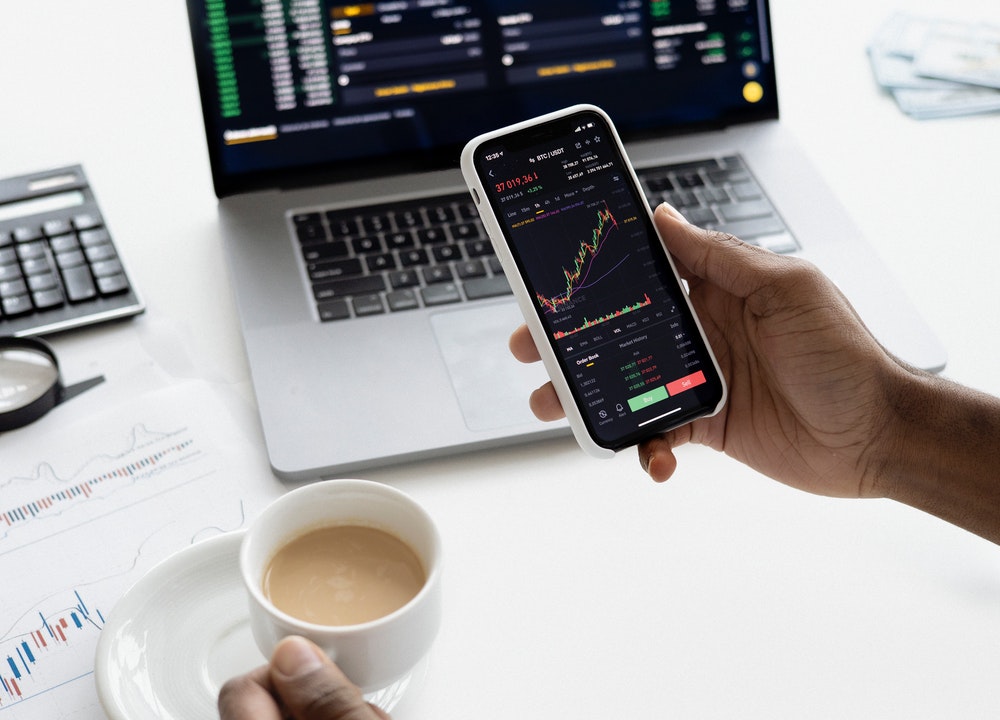

That evening in a quiet corner of a coffee shop, an independent trader named Ryan sat staring at his laptop screen. The wall clock was pointing to nine at night. The black coffee in his hand was getting cold, completely forgotten.
Ryan’s monitor displayed a gold chart (XAU/USD) that initially looked completely flat and calm. But within seconds, the chart suddenly formed an extraordinarily long vertical line. Prices plummeted, reversed instantly, and then surged far above the starting point.
The equity in Ryan’s trading account shrank significantly in just five minutes. Ryan hadn’t made any mistakes in his usual daily technical analysis. He simply forgot that tonight marked a major economic event that happens only once a year: The Jackson Hole Symposium.
Ryan’s bitter experience is a familiar story in the financial world. Every year, there are rare moments when global markets seem to hold their breath. These annual events control the movement of trillions of dollars across the globe.
Why can an annual gathering trigger such massive waves across stock markets, forex, and cryptocurrencies? How can we as market participants navigate these high-impact moments safely? Let’s explore this topic thoroughly, practically, and step by step.
Why Do Some Economic Events Only Happen Once a Year?
In trading and investing, we are used to weekly or monthly economic releases. There are inflation figures (CPI), employment reports (NFP), and routine interest rate decisions. All of these reports arrive on a regular calendar schedule.
However, certain strategic events are designed specifically as annual conferences. These events serve as gathering grounds for the highest-ranking economic policymakers from around the world.
During these annual moments, the long-term direction of the global economy is discussed. Central bankers no longer talk about last month’s data points. They focus on formulating frameworks and economic visions for years to come.
Because the scope is broad and forward-looking, market uncertainty reaches its absolute peak. Financial markets deeply dislike uncertainty. When speculation arises regarding global policy shifts, asset prices respond aggressively.
Jackson Hole Symposium: The Main Stage for Global Policymakers

Among all annual financial gatherings, the Jackson Hole Symposium sits right at the top of every investor’s watchlist. This event is hosted annually by the Federal Reserve Bank of Kansas City.
The physical event takes place in a quiet valley named Jackson Hole in Wyoming, USA. Though remote and far from Wall Street, all eyes in the financial world turn there every late August.
Who Attends This Event?
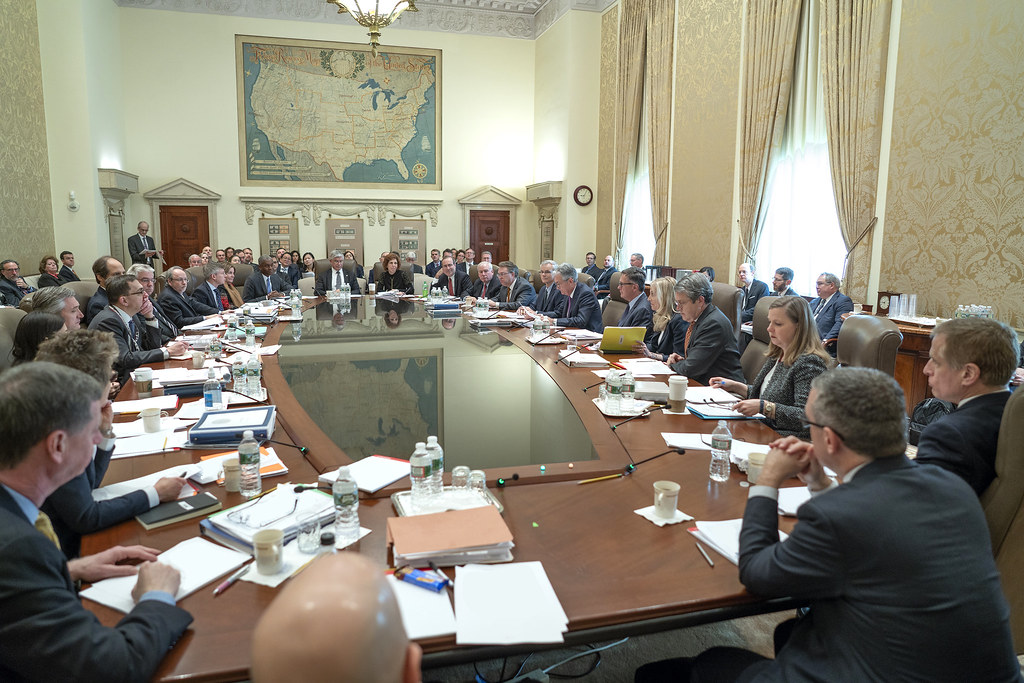
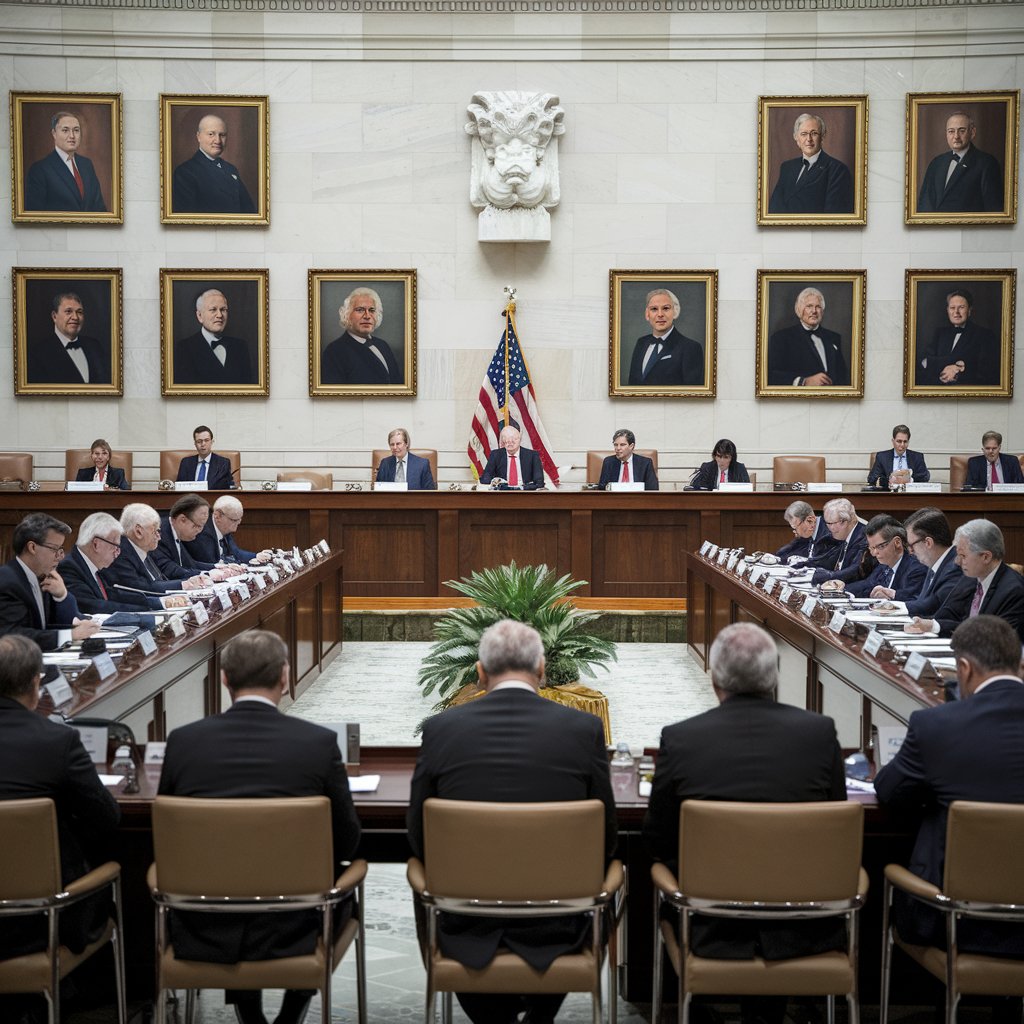
This is far from a standard internal bank meeting. Jackson Hole brings together global financial leaders from every corner of the world.
- Major Central Bank Governors: The heads of the Federal Reserve (US), European Central Bank (EU), Bank of England (UK), Bank of Japan, and others.
- Finance Ministers: Top fiscal policymakers from both developed and emerging nations.
- Senior Academics & Economists: Leading thinkers from top universities presenting cutting-edge research.
Why Is the Opening Speech So Heavily Anticipated?
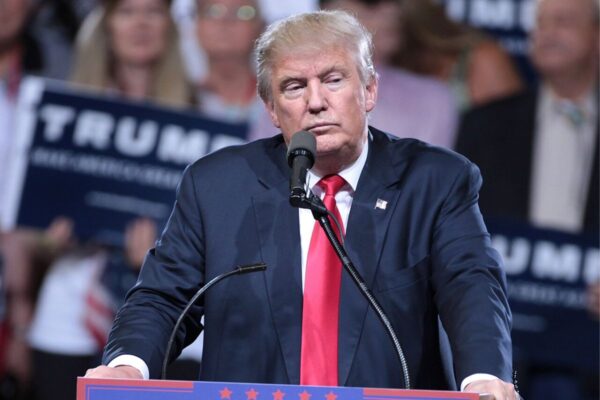
The single most anticipated session of the symposium is the keynote address by the Chair of the Federal Reserve. Every word uttered by the leader of the world’s most powerful central bank is scrutinized by algorithms and senior analysts alike.
When the Fed Chair hints that the economy is heating up or that inflation remains a threat, traders immediately translate that into future interest rate expectations. A slight change in phrasing can trigger market movements worth billions of dollars within seconds.
Realities on the Ground: What Really Happens During Extreme Volatility
Let’s return to the real-world experiences shared by many retail traders worldwide. What actually takes place behind the trading screen during these massive news releases?
Slippage and Widening Spreads
Many traders believe that setting a Stop Loss provides 100% absolute protection. However, during annual events like Jackson Hole, market liquidity can evaporate instantly.
As speeches begin, major liquidity providers and investment banks temporarily pull their order books to avoid exposure. Consequently, available market volume drops sharply.
This causes two major issues:
- Widening Spreads: The difference between the bid and ask price expands dramatically.
- Slippage: Your order gets filled at a price significantly different from where your Stop Loss was originally set.
Psychological Traps: FOMO and Revenge Trading
Watching price bars move dozens of pips in fractions of a second creates a powerful adrenaline rush. This emotional charge often triggers Fear of Missing Out (FOMO).
Traders get tempted to hit Buy or Sell immediately without waiting for confirmation, terrified of missing the move. When price suddenly whipsaws in the opposite direction, severe account losses often follow.
After experiencing a sudden loss, the next emotional wave hits: revenge trading. Trying to win back lost funds against a volatile market is a dangerous spiral that can wipe out remaining capital in minutes.
How Annual Events Impact Different Financial Assets

The volatility generated by annual policy symposiums is never isolated to a single market. The shockwaves spill across nearly every corner of global finance.
1. Foreign Exchange (Forex Major Pairs)
The US Dollar serves as the primary global reserve currency. Any policy signal coming from the Federal Reserve directly alters the strength of the US Dollar Index (DXY).
Currency pairs like EUR/USD, GBP/USD, and USD/JPY frequently move hundreds of pips within minutes. A hawkish tone pushing for higher interest rates boosts the Dollar, while a dovish stance favoring rate cuts causes it to fall.
2. Spot Gold (XAU/USD)
Gold is prized as a safe-haven asset, but it offers no yield or interest. Because of this, gold prices are exceptionally sensitive to US interest rates and government bond yields.
When the annual symposium clarifies the outlook for inflation and rates, XAU/USD typically becomes one of the most active and volatile markets on the trading desk.
3. Global Stock Indices
Equities thrive on certainty and lower borrowing costs. Low interest rates make corporate borrowing cheap, paving the way for business expansion.
If speeches during the annual gathering indicate that tight monetary policy will persist longer than expected, benchmark equity indices like the S&P 500, Nasdaq, and Dow Jones can experience sharp sell-offs.
4. Cryptocurrency Markets
Over recent years, digital assets like Bitcoin and Ethereum have become deeply intertwined with institutional capital flows. Crypto assets now exhibit a strong positive correlation with high-growth technology stocks.
When global monetary conditions tighten following signals from the symposium, crypto markets often experience sudden spikes in liquidations and price pullbacks.
Why Technical Analysis Can “Fail” During Major Event Risk
Traders often point out that indicators like RSI, Moving Averages, or Stochastics show extreme overbought or oversold levels right before a crash or rally. Yet during major events, these technical lines seem to lose all effectiveness.
Institutional Capital Outweighs Chart Patterns
Technical analysis measures historical collective behavior under normal market conditions. But when high-impact macro news arrives, massive new capital flows flood the market.
Decisions made by pension funds, hedge funds, and central banks are driven by macro fundamentals, not chart patterns. These massive capital flows break through key support or resistance levels without regard for traditional technical setups.
Respecting Fundamental Dynamics
Acknowledging this limitation doesn’t mean technical analysis is useless. It remains an indispensable tool for timing entries and managing risk. However, understanding macro fundamentals tells you when to step back and align your positions with the broader economic tide.
Practical Guide: Protecting Your Capital During Annual Events
Handling extreme volatility requires a disciplined, rule-based approach. Here is a clear framework to keep your capital safe whenever these annual market events approach.
1. Maintain an Economic Calendar and Mark Key Events
The simplest step is often the most neglected: regularly checking an economic calendar. Annual events like Jackson Hole are scheduled months in advance.
Mark these dates on your charts. Add a reminder a week prior so you don’t execute routine daily setups without factoring in the approaching macro storm.
2. Decide Your Approach: “Trade the News” or “Wait and See”?
You must establish your operational role well before the news breaks. Broadly speaking, there are two primary approaches:
- Protective Approach (Wait and See): Close open positions before the speech begins and remain on the sidelines until market liquidity returns to normal. This is the safest choice for the vast majority of retail traders.
- Aggressive Approach (Trade the News): Attempting to capture immediate momentum during the release. This requires extensive experience and strict execution mechanics.
3. Reduce Your Position Size by Half
If you choose to hold positions during an event window, the golden rule is to scale down your risk parameters.
Cut your normal lot size by 50% to 70%. If your standard risk per trade is 2% of your total balance, reduce it to 0.5%. Lowering your position size directly offsets the risk of slippage and wider spreads.
4. Never Move Your Stop Loss Away
When prices move rapidly toward your Stop Loss, anxiety kicks in. The urge to drag your Stop Loss further out in hopes of a sudden reversal is powerful.
This is one of the quickest ways to severely damage a trading account. Keep your Stop Loss firmly in its original spot based on your pre-planned risk parameters.
The “Post-News Confirmation” Strategy for Day Traders

For traders looking to capture profitable opportunities without taking on execution chaos, the Post-News Confirmation strategy offers a balanced path forward.
Rather than guessing the direction of a speech beforehand, this method focuses on market reaction after the initial surge subsides.
Step 1: Let the First Wave Pass
When the keynote speech begins, allow price to move freely for the first 15 to 30 minutes. Do not execute any orders during this window. Let institutional order flow absorb the immediate news headline.
Step 2: Observe Candle Closures on M15 or H1 Timeframes
Wait for the 15-minute (M15) or 1-hour (H1) candle to close. A completed candle closure offers a clearer picture of who holds control—the buyers or the sellers.
Step 3: Identify a Retracement Zone
Prices that surge aggressively in one direction usually undergo a short technical pullback before resuming their primary trend.
Use Fibonacci Retracement levels (such as 50% or 61.8%) or newly formed Support-Become-Resistance (SBR) levels to mark potential entry zones.
Step 4: Execute in the Direction of the Confirmed Impulse
Enter the market as price retests the retracement zone, placing your trade in the direction of the post-news impulse. Position your Stop Loss just beyond the high or low established during the initial news spike.
Using this framework, you don’t need to predict economic outcomes. Instead, you trade alongside the confirmed trend established by institutional capital.
Trading Psychology: Staying Calm Under Pressure
Financial markets are inherently unpredictable. Even with immaculate preparation, no strategy guarantees a 100% win rate.
Accepting Losses as a Cost of Doing Business
If a trade hits your Stop Loss during a news event, accept it as a normal operational cost.
Professional traders are not measured by their ability to predict news outcomes perfectly every time. They are defined by their discipline in capping losses when market realities disagree with their thesis.
Review Your Trading Journal
Once the event passes and market conditions normalize, review your execution. Log every action into your trading journal:
- Did you follow your pre-market plan?
- Did emotions lead to impulsive decisions during the price spike?
- How significant was the difference between your planned fill and your actual execution price?
This review process builds the experience necessary to handle similar high-impact events in the years ahead.
Conclusion: Turn Annual Events into Opportunities, Not Threats
Annual economic events like the Jackson Hole Symposium carry a reputation for shaking up global markets. The resulting volatility can pose severe risks to unprepared traders, yet it also opens up structured opportunities for those who plan ahead.
Succeeding through these market conditions isn’t about guessing direction. It comes down to strict risk management, emotional composure, and respecting market mechanics.
By understanding macro contexts, scaling down exposure, and waiting for confirmed price action, you can approach major annual events with clarity and confidence. Markets will always provide new opportunities—your primary job is protecting your capital so you’re ready to take them.