Investing vs. Trading: Which Path Leads to True Financial Freedom?
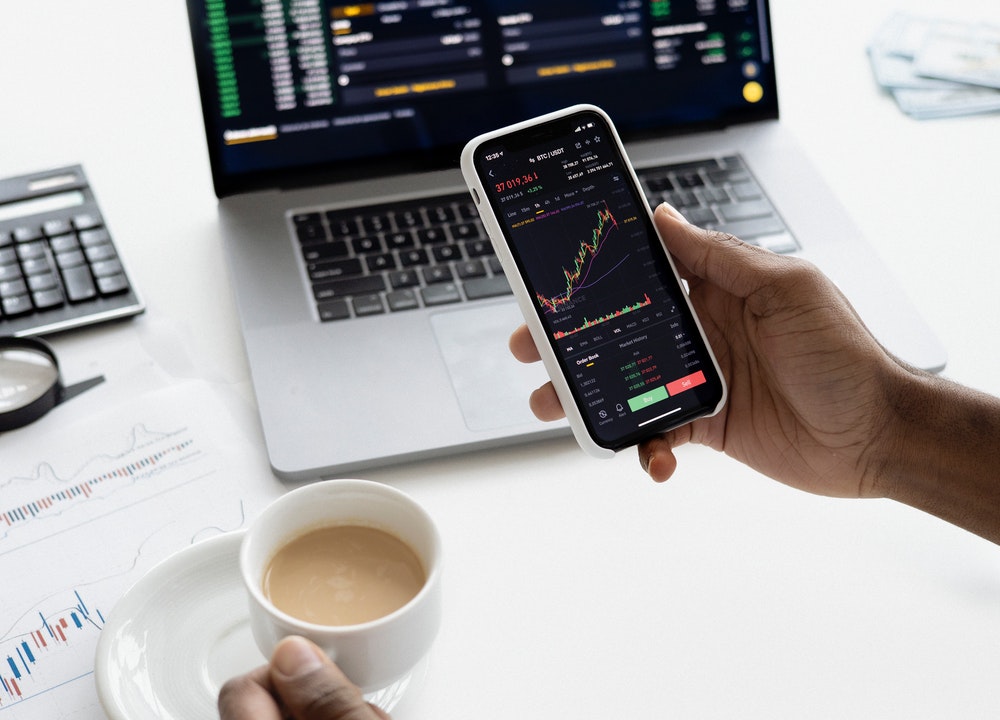
Imagine sitting at your favorite coffee shop on a bright Tuesday morning, looking out the window while enjoying a fresh brew. You open your laptop, glance at your brokerage dashboard, and realize your money is actively working for you while you sip your drink.
For millions of people around the world, this dream of financial independence is what draws them into the stock market. However, the exact route people take to reach that destination often splits into two vastly different roads.
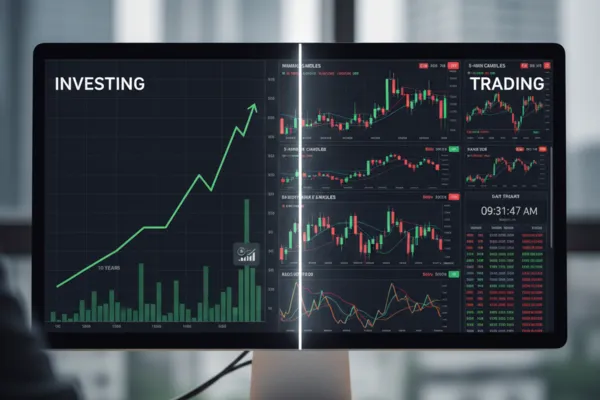
On one side lies the patient world of long-term investing, where wealth is built slowly through compound growth. On the other side sits the fast-paced arena of active trading, where market participants aim to profit from daily or weekly price swings.
Both methods have produced extraordinary success stories, but they require entirely different mindsets, skill sets, and risk tolerances. Let us explore these two distinct financial journeys so you can determine which path truly aligns with your personal vision of freedom.
The Core Difference: Wealth Accumulation vs. Income Generation
To choose the right financial path, you must first understand the fundamental philosophy that separates investing from trading. While both activities happen inside the exact same financial markets, their core objectives are completely different.
Investing is primarily an asset accumulation strategy focused on building wealth over long horizons. Investors purchase shares of high-quality businesses, index funds, or real estate with the expectation that these assets will appreciate in value over years or decades.
Trading, on the other hand, is essentially a performance-based skill focused on short-term income generation. Traders buy and sell financial instruments—such as stocks, options, or foreign currencies—to capture immediate market inefficiencies and price movements.
An investor views a stock as an actual piece of a living, breathing business. A trader views that same stock as a ticker symbol with fluctuating price charts and momentum patterns.
Path 1: The Patient Investor’s Journey
Investing is often compared to planting an oak tree in your backyard. You do not dig up the seed every morning to check if the roots are growing; instead, you nourish it, give it time, and let nature take its course.
Long-term investors rely heavily on fundamental analysis, evaluating a company’s balance sheet, revenue growth, competitive advantage, and executive leadership. They care deeply about what a company produces and how sustainable its business model is.
The ultimate superpower of the long-term investor is compounding interest, which Albert Einstein famously dubbed the eighth wonder of the world. By reinvesting dividends and allowing capital gains to compound over decades, modest initial sums can transform into life-changing wealth.
Because investors maintain a multi-year horizon, they do not need to spend their precious days glued to price charts or breaking news feeds. This passive nature is precisely why many consider investing to be the ultimate vehicle for lifestyle freedom.
Real-World Case: The $10,000 Apple Paradox (May 15, 1997)
To truly appreciate the power of long-term investing versus short-term speculation, let us look at a historical moment that forever changed corporate history.
On May 15, 1997, Apple Computer was facing severe financial distress, and its stock split-adjusted price was trading for less than $0.25 per share. Wall Street analysts were writing obituaries for the tech firm, expecting bankruptcy to strike at any moment.
Imagine an investor named Sarah who decided to put $10,000 into Apple stock on that specific day in May 1997, choosing to hold through every market storm. Over the next two decades, Apple introduced the iPod, the iPhone, and transformed into a multi-trillion-dollar giant.
By holding her shares through multiple stock splits, economic recessions, and wild market panics, Sarah’s single $10,000 investment grew into over $15 million decades later. She did not need to make hundreds of successful trades; she simply picked a winner and let time do the heavy lifting.
Meanwhile, active day traders during that exact same week in 1997 made thousands of quick transactions, scraping together modest daily profits. Yet, almost none of those day traders captured the life-changing wealth that Sarah achieved simply by sitting on her hands.
The Advantages of the Long-Term Investor
The primary benefit of long-term investing is its exceptional tax efficiency and low transactional overhead. In most global tax jurisdictions, holding assets for more than a year qualifies you for significantly lower capital gains tax rates.
Furthermore, long-term investors pay minimal brokerage fees because their trading frequency is exceptionally low. They do not lose large portions of their capital to bid-ask spreads or constant transaction costs.
Investing also protects your mental health from the emotional rollercoaster of daily market volatility. When the market experiences a sharp correction, a long-term investor views it not as a disaster, but as a temporary discount on great businesses.
Most importantly, investing allows you to decouple your time from your earning potential. You can excel in your full-time career, spend quality time with family, or pursue creative hobbies while your investment portfolio quietly compounds in the background.
Path 2: The Active Trader’s Arena
If investing is like planting an oak tree, active trading is more akin to navigating a high-speed speedboat through unpredictable ocean waters. It requires razor-sharp focus, lightning-fast execution, and emotional detachment.
Active traders rely primarily on technical analysis, using price charts, candlestick patterns, moving averages, and volume indicators to predict short-term price movements. They are far less concerned with a company’s earnings reports than with how market participants are reacting right now.
Traders operate across various timeframes depending on their personal style and risk tolerance. Day traders open and close positions within a single trading session, scalpers hold positions for mere seconds, and swing traders hold positions for days or weeks.
The primary attraction of trading is the ability to generate rapid cash flow regardless of economic conditions. A skilled trader can profit in rising markets, falling markets, or sideways markets by utilizing both long and short positions.
Real-World Case: The Flash Crash Chaos (May 6, 2010)
To understand the intense environment that active traders navigate, we must examine one of the most chaotic days in stock market history: the Flash Crash of May 6, 2010.
At approximately 2:32 PM Eastern Time, the Dow Jones Industrial Average suddenly plunged nearly 1,000 points—almost 9% of its total value—in less than thirty minutes. Hundreds of billions of dollars in market value evaporated instantly as automated trading algorithms malfunctioned.
A swing trader named Alex was actively holding highly leveraged long positions on major blue-chip equities when the crash began. Within seconds, automated stop-loss orders were triggered at worst-case prices, wiping out months of hard-earned trading profits before he could manually intervene.
Conversely, a small group of highly disciplined day traders who recognized the technical breakdown shorted the market or bought volatility instruments, making fortunes in a matter of minutes.
By 3:00 PM, the market had recovered most of its losses, but the events of that afternoon highlighted a sobering reality for traders. High-frequency algorithms, slippage, and sudden liquidity black holes can destroy a trading account in the blink of an eye.
Risk Management 101: Stop-Loss Orders vs. Dollar-Cost Averaging
Every market participant must eventually come to terms with risk management, but investors and traders execute this survival discipline in radically opposite ways. Understanding how each group manages risk provides a clear window into their core philosophies.
For active traders, the primary line of defense against catastrophic market losses is the stop-loss order. A stop-loss is an automated instruction placed with a broker to sell an asset immediately when its price drops to a predetermined level.
Traders use stop-loss orders to ensure that no single trade can destroy a significant portion of their trading capital. By strictly capping their risk at 1% or 2% of their total account value per trade, traders can survive a long string of consecutive losses without going bankrupt.
For long-term investors, the preferred method of managing volatility is Dollar-Cost Averaging (DCA). Instead of trying to time the market’s bottoms, an investor commits to purchasing a fixed dollar amount of an asset at regular, scheduled intervals regardless of its current price.
When market prices drop sharply, the investor’s fixed dollar amount automatically buys more shares of the asset. Over long periods, this systematic buying lowers the average cost per share, turning market dips into powerful long-term wealth generators.
While a trader views a falling asset price as a signal to cut losses and exit immediately, an investor views a falling price on a great business as a buying opportunity. This stark contrast illustrates how risk management is tailored directly to your chosen time horizon.
The Psychological Toll of Active Trading
While the promise of rapid wealth creation makes trading sound enticing, the psychological reality is notoriously harsh. Financial industry studies consistently show that over 90% of active retail traders lose money over a multi-year period.
The primary enemy of the trader is not the market, but their own emotional impulses—specifically fear and greed. When real money is on the line, basic human psychology tempts people to cut winning trades too early and hold losing trades far too long.
Trading requires an incredible degree of discipline to adhere strictly to risk management rules. A trader must accept that losing trades are an inevitable cost of doing business and cut losses without hesitation.
Additionally, active trading is essentially a full-time job that ties your physical presence and mental energy directly to the market hours. If you are not actively analyzing charts or executing trades, you are not generating trading income.
Practical Blueprint: How to Choose Your Path
Deciding whether to pursue investing or trading is not a matter of finding which strategy is objectively “better.” Instead, it is about identifying which approach fits your unique personality, capital base, and lifestyle aspirations.
Ask yourself these four critical questions before committing your capital to either path:
1. What Is Your Available Time Commitment?
If you already work a demanding 50-hour a week job or run a growing business, attempting to day trade during market hours will likely lead to burnout and costly mistakes. Passive indexing or fundamental investing is far better suited for busy professionals.
2. How Do You React Under Immediate Financial Stress?
If seeing your account balance drop by 5% in ten minutes causes you physical anxiety or sleepless nights, active trading will be a miserable experience. Traders must maintain cold, robotic detachment when taking losses.
3. What Is Your Primary Financial Objective?
If your primary goal is to secure a comfortable retirement, fund your children’s education, or build generational wealth, long-term investing is the proven path. If your goal is to replace your active job income right now and you have hours to dedicate to skill development, trading might appeal to you.
4. What Is the Size of Your Starting Capital?
Trading with a small account often forces people to take excessive financial leverage, which dramatically increases the probability of blowing up the account. Long-term investing allows you to start small, consistently dollar-cost averaging modest amounts over time.
The Hybrid Approach: The Core-Satellite Strategy
Who says you have to choose exclusively one path and completely ignore the other? Many of the world’s most successful market participants utilize a balanced, hybrid strategy known as the Core-Satellite approach.
In this framework, you allocate the vast majority of your wealth—typically 80% to 90%—into a solid “Core” portfolio. This core consists of broad-market index funds, high-dividend equities, and quality long-term growth stocks that you never touch.
The remaining 10% to 20% of your capital is placed into a separate “Satellite” trading account. This allows you to actively trade momentum stocks, explore crypto assets, or sell option contracts for short-term income.
This hybrid model gives you the best of both worlds. Your long-term financial security remains protected in the core, while your desire for active market engagement is satisfied in the satellite account without risking your overall lifestyle.
Key Takeaways for Financial Success
Clarify your true goal: Determine whether you need long-term capital growth or immediate short-term cash flow.
Respect your psychological bandwidth: Choose the path that lets you sleep peacefully at night without constant anxiety.
Prioritize risk management: Whether investing or trading, protecting your principal capital must always be your top priority.
Beware of transaction costs: High frequency trading incurs taxes and commissions that can drastically erode your long-term returns.
Consistency outperforms intensity: Steady, disciplined execution over decades beats erratic bursts of aggressive market speculation.
Redefining True Financial Freedom
At the end of the day, true financial freedom is not just about accumulating a massive number in a bank account. True freedom is the absolute ownership of your time—the ability to wake up every morning and spend your hours exactly how you choose.
If you choose a path that yields millions of dollars but leaves you chained to six computer monitors eight hours a day in a state of perpetual stress, you may have gained wealth, but you have missed freedom.
Long-term investing offers a quiet, reliable, and time-tested road to passive independence that allows you to live your life fully while your money grows. Active trading offers a challenging, skill-based craft that can generate extraordinary active income for those who master its strict discipline.
Reflect honestly on your personal goals, assess your risk tolerance, and choose the path that serves your life—not the other way around. Whichever road you take, approach the market with humility, commit to continuous learning, and keep your long-term freedom as your ultimate guiding star.