



The Impact of Central Bank Interest Rate Hikes on the Stock and Crypto Markets
The investment world in recent years has felt like riding a thrilling roller coaster. One of the primary driving forces behind the fluctuating asset prices is central bank policy regarding benchmark interest rates. When a central bank decides to raise interest rates, the shockwaves are immediately felt across various investment instruments, especially the stock and crypto markets.
For novice investors, announcements of interest rate hikes often trigger panic, leading to flawed investment decisions. Green charts suddenly turning a deep red on a smartphone screen can certainly cause a racing heartbeat. Why does the policy of a single institution hold the magical power to cripple global financial markets?
Understanding the correlation between interest rates, stocks, and crypto assets is the ultimate key to stepping up from being a mere speculator to becoming a smart investor. This educational article will dissect in deep detail the impact of this macroeconomic policy on your portfolio. We also include a practical guide and tactical tips so you can still book profits amidst a high-interest-rate era.
Why Do Central Banks Raise Interest Rates?
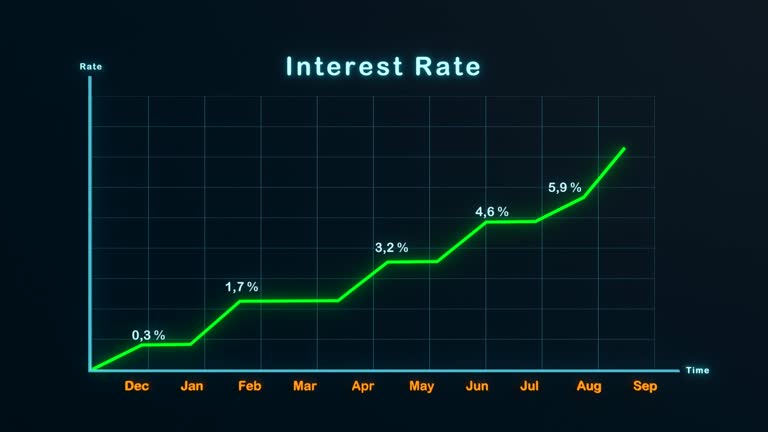
Before discussing the impact on financial markets, we must first understand the motive behind a central bank’s decision. Institutions like the Federal Reserve (The Fed) in the United States or Bank Indonesia do not raise interest rates without solid reasons. The primary enemy they aim to conquer through this policy is usually uncontrolled inflation.
When an economy grows too fast or global supply chain disruptions occur, the prices of basic necessities will spike massively. This condition erodes the real purchasing power of the fiat currency held by the public. To rein in the pace of these price hikes, the central bank implements a tight monetary policy by raising its benchmark interest rate.
In basic economic theory, an interest rate hike aims to make the cost of borrowing money more expensive across all lines. When borrowing becomes expensive, consumers and corporations automatically reduce consumption and postpone business expansions. This decline in market demand gradually forces prices to stabilize and cools down inflation.
How High Interest Rates Impact the Stock Market
Historically, the stock market and benchmark interest rates share an inverse relationship. When the interest rate curve moves upward, the composite stock price index usually experiences pressure or corrections. This phenomenon occurs due to fundamental changes in the performance of listed companies (issuers) as well as a shift in investor psychology.
1. Ballooning Capital Costs and Decreasing Net Profits
The majority of public companies utilize bank loans or issue bonds to fund their operations and business expansions. When the central bank hikes interest rates, the interest expenses on these corporate debts automatically balloon significantly.
This rising financial burden directly erodes the net profit margins generated by companies in the current quarter. When financial reports show a decline in earnings, the attractiveness of the company’s stock fades in the eyes of institutional investors. This triggers massive sell-offs, causing stock prices to slide on the trading board.
2. Lowering Stock Valuation
In professional equity analysis, analysts utilize the Discounted Cash Flow (DCF) method to determine the intrinsic value of a stock. The benchmark interest rate acts as a core component in determining the discount rate of projected future cash flows.
When interest rates rise, the discount rate used in the financial mathematics formula also increases. Consequently, the present value of the company’s future potential profits shrinks drastically. This decline in theoretical valuation prompts investment managers to slash target stock prices in the regular market.
3. Migration of Capital to Fixed-Income Instruments
Investors are rational beings who always look for the most optimal risk-reward ratio for their capital. High interest rates allow low-risk instruments, such as bank time deposits and Government Securities (SBN), to offer highly lucrative yields.
Why should investors take massive risks in the stock market if they can secure stable, state-guaranteed returns from bonds? This condition triggers a massive capital outflow from the equity market toward the fixed-income market. The resulting drop in stock market liquidity makes it difficult for stock prices to crawl back up.
Stock Sectors Whittled Down vs. Sectors That Benefit

The impact of an interest rate hike is not uniform across all industrial sectors in the stock exchange. While some sectors bear the brunt of the damage, a handful of sectors actually reap blessings from tight monetary policies.
The technology and growth stock sectors are the most fragile victims when a high-interest-rate era strikes. Tech companies generally rely on heavy debt funding to conduct research and burn cash for future user growth. When capital costs skyrocket and future valuations shrink, tech stocks usually experience the deepest price corrections.
The property and automotive sectors suffer equally heavy blows because their products are highly dependent on consumer credit. An increase in interest rates pushes mortgage and vehicle loan rates higher, causing public buying interest to plummet. This drop in sales numbers directly translates to sharp price corrections for property developers and auto manufacturers.
Conversely, the banking and financial sectors often emerge as winners amidst the storm of rising interest rates. Banks can quickly raise loan interest rates for debtors, while raising the public’s savings interest rates at a much slower pace. This widening profit margin (Net Interest Margin) causes the net income of major banks to jump, driving their stock prices upward.
The Domino Effect of Interest Rate Hikes on the Crypto Market
Crypto assets, such as Bitcoin, Ethereum, and a long line of altcoins, are relatively new investment instruments in the financial ecosystem. Crypto is categorized as a highly speculative asset class with extreme volatility (high-risk, high-return). Interestingly, the link between global macroeconomic liquidity and crypto price movements is incredibly tight.
1. The Risk-Off Phenomenon and the Flight of Global Liquidity
When central banks flood the market with cheap liquidity (low interest rates), that money flows into speculative assets in search of high yields. This momentum is what triggered massive bull runs in the crypto market in previous cycles.
However, when interest rates are raised, liquidity in the global financial market tightens, and cash becomes an expensive commodity. Institutional and retail investors quickly switch their investment mode from aggressive to defensive (risk-off). They liquidate their riskiest assets first, moving their capital into fiat currencies or government bonds.
2. Strengthening of the US Dollar Against Digital Assets
An interest rate hike by the US central bank (The Fed) automatically boosts the US Dollar Strength Index (DXY). When Dollar yields are high, global demand for the currency increases because it offers attractive savings returns.
Since most major crypto assets are paired against the US Dollar (such as BTC/USD), a strengthening Dollar puts downward pressure on digital asset prices. Bitcoin and other cryptos indirectly become more expensive to purchase using weakening non-Dollar currencies. This exchange rate conversion factor is often what sends crypto prices sliding when Fed policy announcements drop.
3. Financial Pressure on Crypto-Based Enterprises
The modern crypto industry no longer stands alone; it is deeply intertwined with venture capital funding systems and institutional loans. High interest rates make operational costs for crypto miners and crypto liquidity providers incredibly expensive.
Many Bitcoin mining companies are forced to dump their Bitcoin reserves into the regular market just to pay off ballooning operational debts and electricity bills. This selling pressure from the industry’s internal side further exacerbates the decline of crypto asset prices on digital exchanges.
Practical Guide: Managing a Stock Portfolio When Interest Rates Rise
Facing an upward trend in interest rates does not mean you have to flee the stock market entirely. You simply need to adjust your strategy and revamp your portfolio to be more adaptive to the new economic landscape.
1. Shift Your Focus to Value Stocks with High Dividend Yields
Amidst economic growth uncertainties, stocks of established issuers that routinely distribute cash dividends serve as safe havens. Companies in this category usually boast strong cash flows and do not carry piling bank debts. The cash dividends you receive periodically can act as a protective bumper for your portfolio value against the erosion of inflation.
2. Accumulate Defensive and Consumer Staples Sectors
People will still buy food, pay electricity bills, and purchase medications regardless of how high bank interest rates sit. Therefore, companies in consumer staples, utilities, and healthcare are categorized as defensive sectors. The earnings performance of these companies tends to remain stable, making their stock prices more resilient against macroeconomic shocks.
3. Avoid Companies with High Debt Ratios
Before buying stocks in a high-interest-rate era, it is mandatory to carefully examine an issuer’s financial statements. Check the Debt to Equity Ratio (DER) to see the proportion of a company’s debt relative to its net equity. Avoid issuers with a DER value well above one, as they are highly vulnerable to bankruptcy due to compounding interest burdens.
Tactical Tips to Survive the Crypto Bear Market
A crypto market downturn triggered by macroeconomic factors is often referred to as a “crypto winter.” This phase demands strong mental fortitude as well as a much stricter risk management strategy than usual.
1. Focus on Large-Cap Crypto Assets (Blue Chips)
When a liquidity storm hits, thousands of small crypto projects (micro-cap altcoins) risk dying out and losing up to 99% of their value. If you still wish to accumulate crypto, limit your capital allocation solely to Bitcoin (BTC) and Ethereum (ETH). These two digital assets possess the strongest network fundamentals and a proven track record of recovering from every financial crisis.
2. Disiplinly Implement a Dollar Cost Averaging (DCA) Strategy
Never try to guess the absolute bottom of an aggressively falling crypto market. The best strategy is to slice your purchases into fixed amounts at regular intervals, such as once a week or once a month. This DCA method helps you secure an optimal average price without draining your emotions and capital all at once.
3. Secure Idle Funds into Yield-Bearing Stablecoins
If you choose to exit crypto volatility temporarily, do not let your capital sit idle on exchanges. Convert your assets into reputable stablecoins pegged 1:1 with the US Dollar. You can take advantage of regular yield features (staking or earn) on legal platforms to obtain competitive passive returns.

Conclusion: Macro Policy Is a Cycle, Not the End of the World
Central bank interest rate hikes are proven to be a daunting ghost for both the stock and crypto markets in the short term. Tightening liquidity and capital migration to low-risk instruments are logical consequences of global macroeconomic laws.
However, as wise investors, we must embed a long-term perspective into our mindset. This tight monetary policy is not a financial apocalypse; rather, it is a normal part of the economic cycle designed to clear out speculative bubbles in the market.
Once inflation is successfully tamed, central banks will gradually lower interest rates again to revitalize the world economy. Investors who endure, continue to learn, and disciplines themselves to secure their assets in the right places during these challenging times are the ones who will reap multiplied profits when the market enters a bullish phase once more.